
Stop EVV Errors From Delaying Your Claims and Payroll.
Michigan EVV software that catches missed clock-ins, incomplete visits, and submission issues before billing — plus your first 3 months free on the full platform.
What “free EVV” includes: mobile and telephony visit capture, GPS, point-of-care signatures, and HHAeXchange transmission. Billing, payroll, and advanced agency-management modules are optional paid services.
 Proudly Partnered with MHHA
See Caretap's Free EVV Software in 15 minutes
A Michigan EVV specialist will walk you through capture, HHAeXchange transmission, compliance monitoring & pricing. No credit card.
What happens next: pick a convenient time, meet a Michigan EVV specialist, and see mobile capture, HHAeXchange transmission, compliance monitoring, and the exact terms of the free EVV offer. No obligation.
Request received
Pick a time below and a Caretap Michigan EVV specialist will meet you for your 15-minute walkthrough. A confirmation is on its way to your email.
Michigan EVV · MMP 26-10
Manual corrections can put your EVV performance at risk
Michigan agencies and FI/FMS providers under MMP 26-10 must meet the clean-visit threshold for applicable EVV visits, per Michigan's compliance methodology. Every manual edit pushes you closer to the 85% line — and most edits start at the point of capture.
Source: MDHHS Bulletin MMP 26-10 and the Michigan Medicaid Provider Manual. MMP 26-10 does not apply to Home Help Individual Providers; confirm current rules with MDHHS and your payers.
Missed clock-outs
A caregiver forgets to clock out, and the office reconstructs the time later. That correction is a manual edit working against your rate.
Missing GPS
A visit captured without a usable location has to be edited after the fact — another correction the methodology counts against you.
Visits rejected by the aggregator
A perfectly captured visit that HHAeXchange rejects still counts as zero until it’s reconciled. Captured is not the same as received.
What’s included in the Michigan Offer
Full Caretap Platform FREE Through December 31, 2026 + EVV at No Additional Cost
EVV Software Included
- Mobile visit capture
- Telephony (IVR) capture
- GPS verification
- Point-of-care signatures
- HHAeXchange transmission
No additional EVV fee
Run More of Your Agency in Caretap
- Scheduling
- Billing & claims
- Payroll
- Advanced reporting
- Agency-management workflows
Plus: Free Data Migration + Free Staff Onboarding
How Caretap Michigan EVV software keeps your visits clean
Three places Caretap does the work for you — at the door, in the office, and at the aggregator.
At the door
Caregivers clock in and out cleanly from their phone
The visit is already on the caregiver’s phone before the shift. One tap captures clock-in, GPS, and a point-of-care signature — so there’s nothing to reconstruct later.
Concrete output: a verified visit with location, time, and signature attached — no end-of-day cleanup.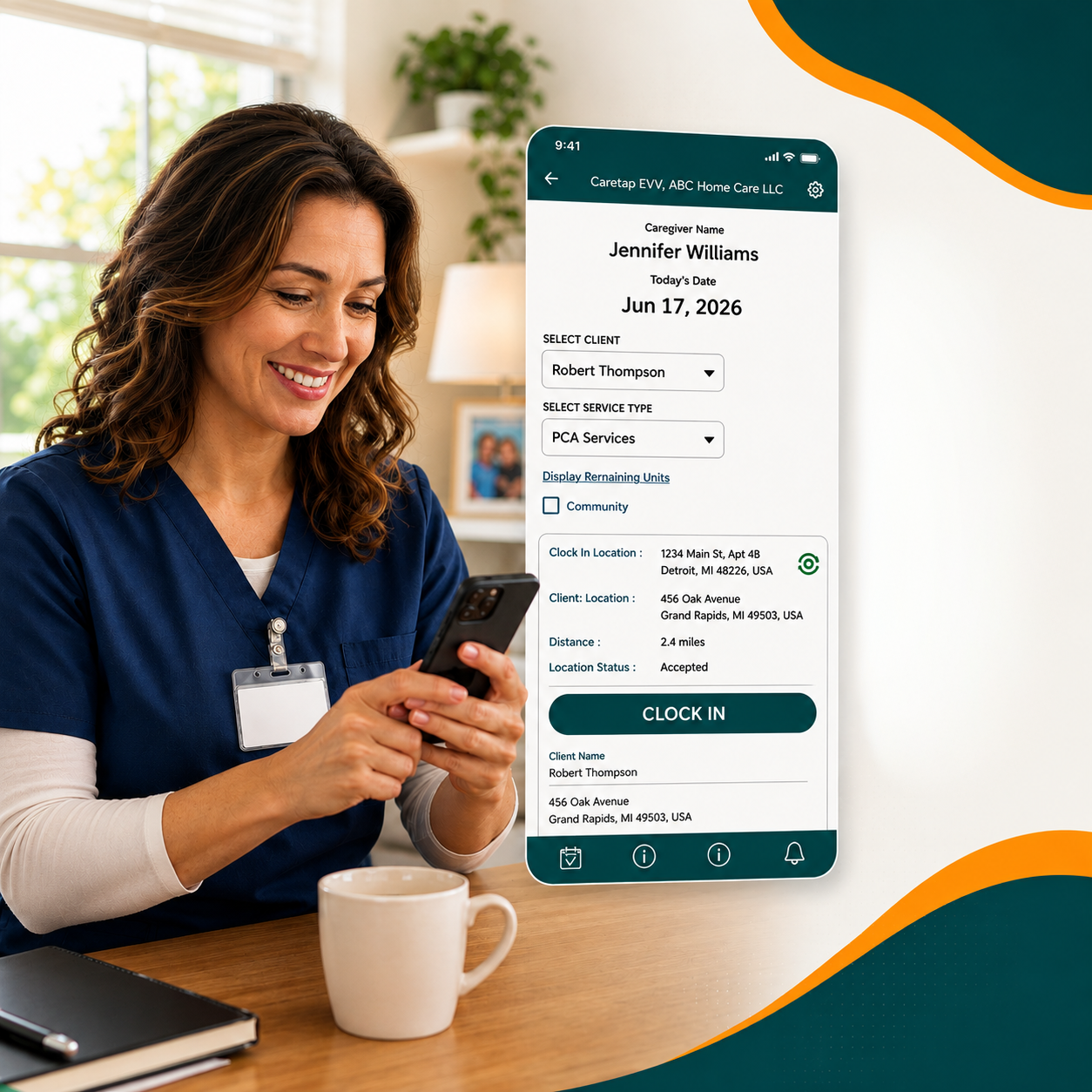
In the office
Watch your clean-capture rate per payer, while the quarter is still open
One dashboard shows each payer against the 85% line and flags the visits that still need attention — so you can coach and correct before the quarter closes, not after.
Concrete output: a live per-payer view with a short, prioritized list of visits to fix today.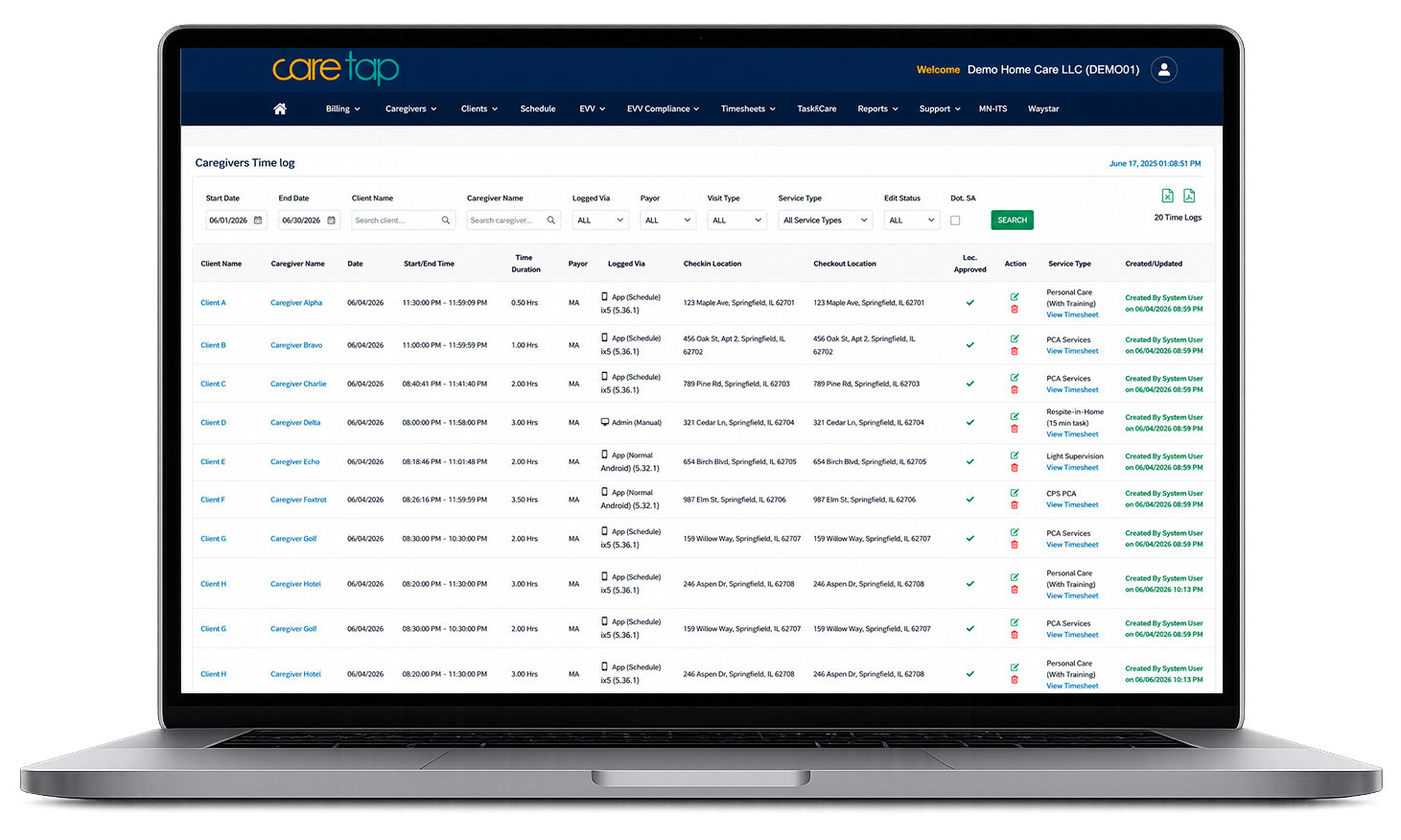
At the aggregator
Know whether each visit was accepted, rejected, or still pending
Caretap confirms each visit was received at HHAeXchange — not just captured. Rejected visits surface immediately so you can reconcile them, without comparing separate spreadsheets.
Concrete output: a transmission log that turns “we think it sent” into a confirmed accepted / rejected / pending status per visit.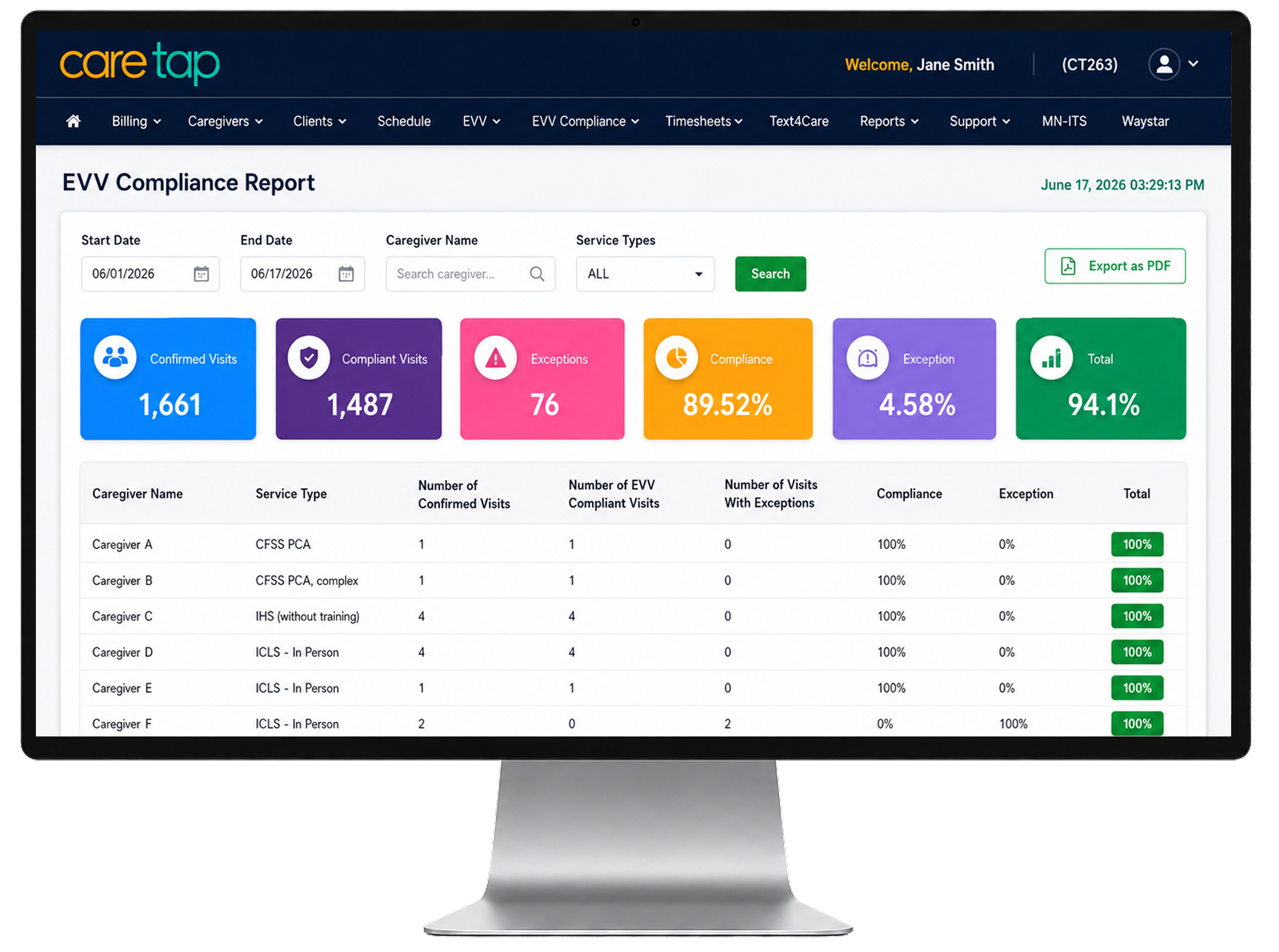
Interface representations shown for illustration; live screens are demonstrated during your walkthrough.
Case study
How Forever Life Home Care reached 98%
Forever Life approached EVV with a clear focus on caregiver education, gradual adoption, and consistent monitoring. Before launching, they sent letters, emails, and training materials so caregivers understood the change coming and what would be expected.
They ran in-person training on the app, clean clock-in/out, and the real consequences of falling out of process — then started with a small pilot group to surface problems early before expanding to everyone. After full rollout, they reviewed visits weekly and kept unnecessary edits down.
The takeaway: EVV compliance isn’t achieved by handing caregivers an app. It takes early communication, practical training, a gradual rollout, and continuous follow-up. Don’t wait for compliance issues to appear.
Questions, answered
Michigan EVV — the common questions
See whether Caretap fits your Michigan agency
In 15 minutes, we’ll show caregiver capture, compliance monitoring, HHAeXchange transmission, and the exact terms of the free EVV offer.
- EVV at no software cost for eligible Michigan agencies
- White-glove onboarding & caregiver training
- Per-payer monitoring while the quarter is still open to fix
Schedule your walkthrough
Michigan-specific. No credit card. No commitment.
Request received
Pick a time below — a Caretap Michigan EVV specialist will meet you for your 15-minute walkthrough.